
Watering
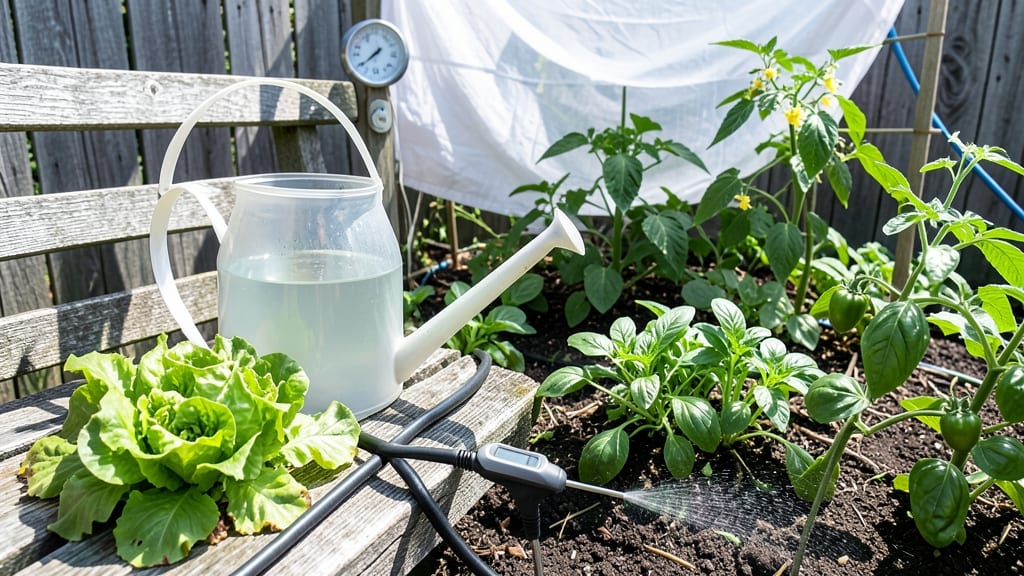
Watering your garden every day in hot weather is unnecessary and can harm plants by causing root stress, fungal diseases, and nutrient leaching. Instead, water deeply 2-3 times per week to encourage strong root growth and soil retention.
Daily watering in extreme heat actually stresses plants by preventing roots from developing properly.
When soil stays constantly wet, oxygen can't reach the roots, leading to rot and inviting fungal infections like powdery mildew. 🌱 The key is to water less frequently but more thoroughly—this forces roots to grow deeper in search of moisture, creating hardier plants that can withstand dry spells.
I've seen firsthand how vegetables like tomatoes and peppers thrive with this approach, producing stronger stems and better yields.
For best results, water in the early morning so moisture evaporates quickly and doesn't linger on leaves. Check soil moisture by sticking your finger 2-3 inches deep—if it's dry, that's your cue to water.
Mulching around plants helps retain moisture while keeping roots cool, which is especially helpful for heat-sensitive varieties. The right balance between watering and letting soil dry slightly creates the perfect environment for both plant health and your garden's long-term success.
💡 In This Article
- How Daily Watering Harms Plants in Hot Climates
- Optimal Watering Schedule for Hot-Weather Gardens
How daily watering harms plants in hot climates
When soil stays saturated from daily watering, roots suffocate because water displaces the oxygen they need to breathe.
This creates anaerobic conditions where harmful bacteria thrive, leading to root rot and weakened plants. 🌱 The problem worsens in hot climates because high temperatures accelerate microbial activity, making overwatered soil a breeding ground for fungal infections like powdery mildew or root rot.
I've noticed this most dramatically with container-grown herbs, where roots circle tightly and become waterlogged when overwatered.
Overwatering also causes nutrient leaching—essential minerals like nitrogen and potassium dissolve and wash away with excess water. This happens because water moves through soil too quickly for roots to absorb nutrients efficiently.
For example, a 1-inch daily watering in clay soil can wash away 20-30% of available nutrients within a week, while sandy soil loses them even faster due to its coarse texture. The result? Plants show signs of deficiency despite having plenty of water.
Another hidden consequence is soil compaction from frequent watering. When soil dries and rewets repeatedly, its structure breaks down, leaving dense, crusty layers that restrict root growth.
This is why plants in overwatered gardens often develop shallow root systems that can't support the plant's needs. 💧 In contrast, deep watering encourages roots to grow downward in search of moisture, creating a stronger, more resilient plant structure that can handle heat waves.
Microbial health also suffers when soil stays too wet. Beneficial microbes like mycorrhizal fungi—essential for nutrient absorption—thrive in well-drained soil but die off in waterlogged conditions. These microbes form symbiotic relationships with plant roots, helping them access water and nutrients more efficiently.
When they're gone, plants struggle even with adequate moisture, leading to stunted growth and poor yields.
Consider the difference between daily shallow watering and a deep soaking every 3-4 days. The latter promotes root growth by encouraging roots to extend deeper, while daily watering keeps them near the surface where they're more vulnerable to heat stress.
This is why drought-resistant plants like lavender and rosemary often thrive with minimal watering—they've evolved to grow deep roots that access moisture efficiently.
Even the physical structure of leaves changes with overwatering.
Excess moisture on foliage can lead to leaf scorch or fungal spots, while plants forced to grow in wet conditions often develop thinner, weaker leaves. 🌿 The contrast is striking when you compare a properly watered tomato plant—with thick, glossy leaves—to one that's been overwatered, where leaves may appear pale and brittle.
This visual difference is a clear sign that your watering routine needs adjustment.