
Tools
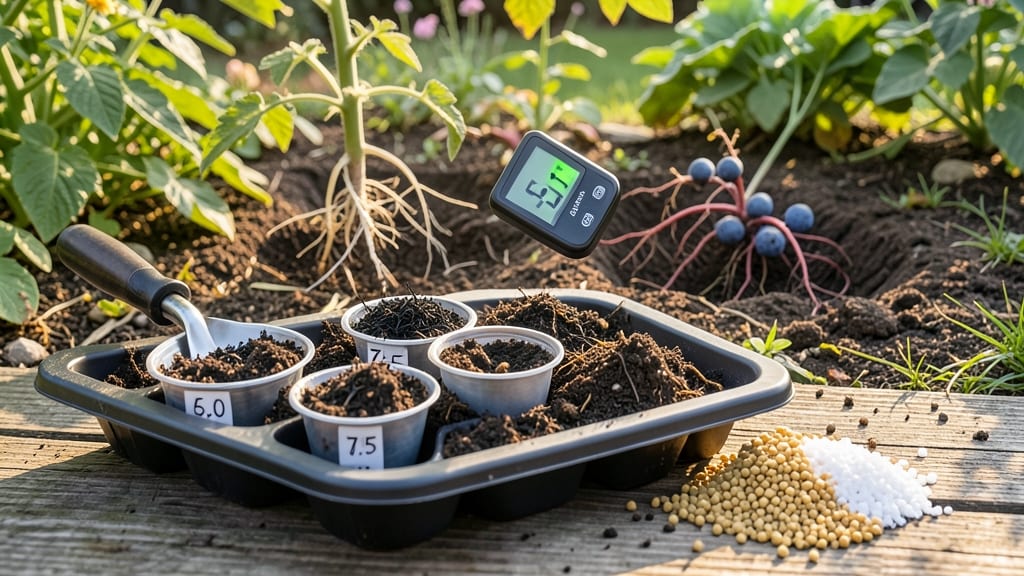
The pH for garden soil should ideally fall between 6.0 and 7.0 for most vegetables and flowers, though acid-loving plants like blueberries thrive at 4.5–5.5 while alkaline-tolerant crops like asparagus prefer 7.0–8.0. Regular testing and adjustments with lime or sulfur ensure optimal growing conditions.
Soil pH isn't just a number—it determines which nutrients your plants can actually access. For example, iron becomes unavailable in alkaline soil (pH above 7.0), causing yellowing leaves even when you're fertilizing regularly. 🌱 Meanwhile, phosphorus locks up in highly acidic conditions (below 5.5), stunting root growth.
The good news? Most home gardeners can achieve the perfect balance with simple soil tests and targeted amendments—like adding elemental sulfur to lower pH or crushed limestone to raise it—during the off-season when soil is most receptive.
What's fascinating is how different plants have evolved to prefer specific pH ranges. Blueberries need that acidic environment to unlock their full flavor potential, while tomatoes and peppers perform best in slightly acidic to neutral soil.
Even lawn grasses have preferences—cool-season grasses like fescue thrive at pH 6.0–7.0, while warm-season grasses like Bermuda prefer 6.0–7.5. This is why professional gardeners always recommend testing before planting, especially if you're dealing with multiple plant types in the same bed.
💡 In This Article
- How Soil pH Affects Nutrient Availability for Plants
- Adjusting Garden Soil pH: Step-by-Step Methods by Plant Type
How soil pH affects nutrient availability for plants
Soil pH directly controls which nutrients dissolve in the soil solution and become available to plant roots. At a neutral pH of 6.5–7.0, most essential nutrients—like nitrogen, phosphorus, and potassium—exist in their most soluble forms.
However, when soil becomes too acidic (5.5) or alkaline (> 7.5), critical minerals either precipitate out of solution or bind tightly to soil particles, making them inaccessible.
For example, iron and manganese become locked up in alkaline soil, causing yellowing leaves even when the plant is starving for these micronutrients. 🌱
The chemistry behind this is fascinating: pH influences the electrical charge of soil particles and nutrient ions. In acidic conditions, aluminum and manganese dissolve in toxic amounts, damaging roots, while phosphorus binds to iron and aluminum oxides, forming insoluble compounds.
Conversely, in alkaline soil, calcium and magnesium become overly available, displacing essential micronutrients like zinc and copper. This is why blueberries (which need pH 4.5–5.5) develop chlorosis—yellowing leaves—if planted in soil with even a slightly higher pH, as their roots can't absorb enough iron.
Microbial activity also hinges on pH balance. Beneficial soil bacteria and fungi thrive in slightly acidic to neutral conditions (6.0–7.0), breaking down organic matter and making nutrients bioavailable.
In contrast, extreme pH levels (below 5.0 or above 8.0) suppress these microbes, reducing nutrient cycling and plant vigor. For instance, mycorrhizal fungi, which form symbiotic relationships with plant roots, struggle to function in highly alkaline soil, weakening the plant's ability to absorb water and nutrients. 💫
Root function itself is impacted by pH. Acidic conditions can increase aluminum toxicity, shortening root hairs and reducing water uptake. Meanwhile, alkaline soils often lead to calcium deficiencies, causing structural weaknesses in cell walls.
This is why tomatoes (ideal pH 6.0–6.8) develop blossom-end rot—a classic calcium deficiency symptom—when grown in slightly alkaline soil, despite adequate fertilizer applications.
Even flowering and fruiting depend on pH. Many plants, like strawberries (pH 5.5–6.5), require acidic conditions to trigger pollination and fruit set. The soil's acidity influences hormone production in plants, affecting everything from seed germination to fruit development.
For example, raspberries, which prefer pH 5.5–6.5, may produce fewer berries or develop poor flavor if the soil pH drifts outside this range due to nutrient imbalances.
What most gardeners overlook is how pH interacts with soil organic matter. Compost and peat moss naturally lower pH, while wood ash raises it. This means that even if you're adding fertilizer, the pH can neutralize its effects.
For example, adding 10 pounds of lime per 100 square feet can raise soil pH by 1.0–1.5 points over a season, but the impact varies based on your soil's buffering capacity—a measure of how resistant it is to pH changes.
Sandy soils change pH more quickly than clay soils, which hold onto their pH like a sponge. 🌿