
Tools
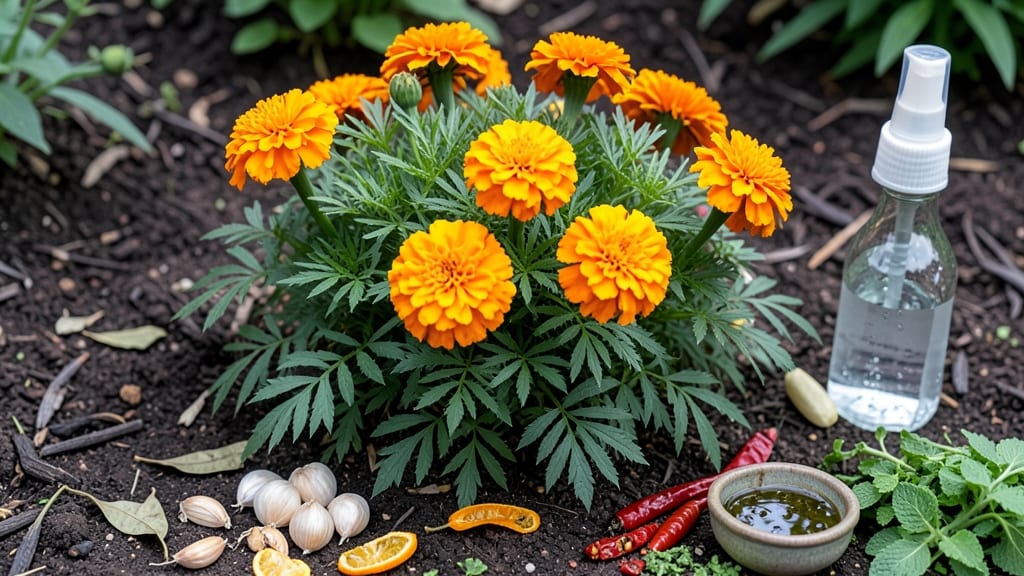
Natural garden repellents use plant-based ingredients like garlic, chili peppers, and essential oils to deter pests such as deer, rabbits, and insects without harming soil or beneficial wildlife. These eco-friendly solutions offer a cost-effective alternative to chemical sprays while maintaining a healthy garden ecosystem.
Creating natural garden repellents taps into the power of volatile organic compounds found in plants, which disrupt pests' ability to detect food sources.
For example, garlic's sulfur compounds create an odor that confuses insects, while capsaicin in chili peppers irritates mammals like rabbits. 🌱 These methods work best when applied consistently, as pests often adapt to scents over time.
Unlike chemical sprays, these solutions break down naturally and won't leave harmful residues in your soil.
For immediate results, I recommend blending garlic, chili peppers, and water into a spray—this potent mix deters even determined critters. The key is reapplication after rain or every few weeks, depending on your climate.
Many gardeners also swear by predator urine blends (like fox or coyote urine) for larger pests, though these require careful sourcing to avoid attracting unwanted wildlife.
💡 In This Article
- How Natural Repellents Work Against Common Garden Pests
- Top 7 DIY Natural Repellent Recipes for Your Garden
How natural repellents work against common garden pests
Natural repellents rely on volatile organic compounds (VOCs)—chemical signals plants emit to deter herbivores. Take garlic, for example: when crushed, it releases allyl sulfides, which mimic the scent of predators and confuse insects like aphids and beetles.
These compounds disrupt pests' olfactory receptors, making your plants less detectable. 🌿 Meanwhile, chili peppers contain capsaicin, which irritates mammals (like rabbits) by binding to their pain receptors, creating an unpleasant burning sensation.
The effectiveness varies by pest type. For insects, scent masking works best—think of marigolds releasing limonene, a compound that repels nematodes and aphids. For larger animals like deer, predator mimicry is key: blends of fox urine or coyote urine (available at garden centers) trigger their flight response.
Even plants like lavender emit linalool, a compound that deters mosquitoes and moths by overwhelming their sensory systems. The key is potency—concentrated solutions (like garlic-chili sprays) work faster than diluted ones.
Timing matters too. Apply repellents at dawn or dusk when pests are most active, and reapply after rain or every 2-4 weeks to maintain effectiveness. Unlike chemical pesticides, these solutions break down naturally, leaving no toxic residues.
For instance, citrus peels contain d-limonene, which repels ants but degrades within days, making it safe for edible gardens. 🌱
Some pests, however, adapt quickly. If you notice reduced effectiveness, rotate ingredients—like alternating garlic spray with neem oil—to keep pests guessing. The science is clear: these repellents work by exploiting pests' natural behaviors, not by killing them.
For example, marigolds release alpha-terthienyl, a compound that deters nematodes without harming beneficial worms or bees.
Consider this: a garlic-chili spray (1 part garlic, 1 part chili, 1 part water) creates a pH imbalance on plant surfaces, making them unappealing to slugs and snails.
The sulfur compounds in garlic also act as a fungicide, preventing mold growth while deterring pests. This dual action makes it a powerhouse for organic gardens.
For best results, combine repellents with physical barriers (like row covers) and beneficial predators (ladybugs for aphids). The synergy between scent-based deterrents and habitat management creates a multi-layered defense that’s far more effective than any single method. 💫