
Watering
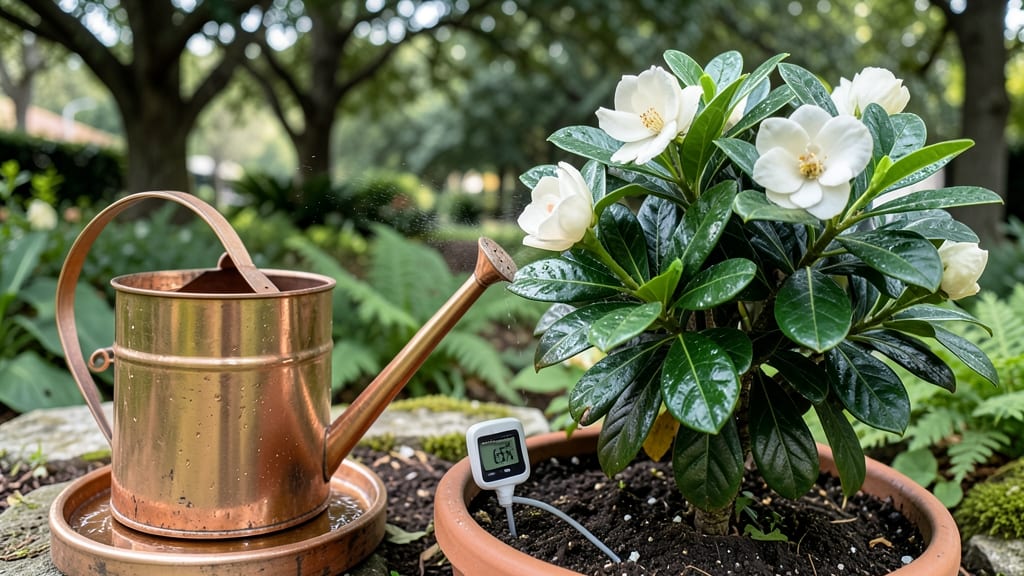
To water a gardenia plant properly, aim for consistent moisture—not soggy soil or bone-dry roots—that keeps those glossy leaves and intoxicating blooms thriving year after year.
Struggling to keep your gardenia blooming with its signature fragrance and glossy leaves? The secret often lies in mastering the delicate art of watering—too much or too little can spell disaster for these tropical beauties.
Gardenia 🌸 plants crave high humidity and well-drained soil, but their roots hate sitting in water. That’s why checking soil moisture with your finger (or a moisture meter) is the key—water when the top inch feels dry, but never let it turn to mud.
Below, I’ll break down the exact schedule for in-ground vs. potted gardenias, how to adjust for summer heat or winter dormancy, and the easiest way to fix common watering mistakes that kill blooms.
The perfect watering schedule for gardenia plants: when, how much, and why it matters
Gardenia plants thrive when you mimic their natural tropical environment, which means consistent moisture without waterlogging. These fragrant shrubs are sensitive to both drought stress and root rot, making watering a balancing act. The key lies in understanding their seasonal needs and how to check soil moisture properly.
I’ve learned through years of growing gardenias that even small adjustments in watering can transform a struggling plant into a blooming beauty.
Your gardenia’s watering schedule should adapt to the seasons and container type. In-ground plants retain moisture longer than potted ones, while summer heat demands more frequent watering. The goal is to keep the root zone consistently moist—not soggy—while ensuring the top inch of soil dries slightly between waterings.
This balance prevents both wilting leaves and fungal diseases like root rot.
Visual Element: Comparison Table
| Season | Watering Frequency | Depth of Watering | Soil Check | Key Notes |
|---|---|---|---|---|
| Spring | Every 2-3 days | 6-8 inches | Top inch dry | Encourage new growth |
| Summer | Daily (deep) | 8-10 inches | Top 1-2 inches dry | Critical for blooms |
| Fall | Every 3-4 days | 6 inches | Top 1 inch dry | Reduce gradually |
| Winter | Every 7-10 days | 4-6 inches | Top 2 inches dry | Minimal watering |
| Potted Gardenias | Every 1-2 days | Until drainage | Top 1 inch dry | Dries faster |
To determine when your gardenia needs water, stick your finger 1-2 inches into the soil. If it feels dry at this depth, it’s time to water. For in-ground plants, this check should happen every 2-3 days in summer and 3-4 days in spring/fall.
Potted gardenias dry out faster, so monitor them daily during heatwaves. I’ve found that using a moisture meter takes the guesswork out of this process—especially for beginners.
Watering in the early morning (between 6-9 AM) is ideal because it allows foliage to dry before evening, reducing the risk of fungal infections. Avoid watering at night, as damp leaves can attract pests like aphids and encourage diseases like powdery mildew.
If you must water in the evening, aim for the soil base rather than overhead spraying. This small adjustment has saved my gardenias from multiple fungal outbreaks over the years.
One common mistake I see is inconsistent watering, which causes stress and bud drop. Gardenias hate fluctuations in moisture—think of it like their tropical roots expect a steady rainforest rhythm.
If you travel often, set up a self-watering system or ask a neighbor to water deeply every 3-4 days. For potted gardenias, a drip irrigation system or saucer with pebbles can help maintain even moisture without overwatering.
In summer heat, gardenias may need daily watering, but always check the soil first. A good rule of thumb is to water until you see water draining from the bottom of the pot or 6-8 inches deep in the ground.
This ensures the root zone gets fully hydrated. During winter dormancy, reduce watering to every 7-10 days unless you’re in a frost-free zone. Overwatering in winter can suffocate roots and lead to rot.
Pay attention to your gardenia’s leaves and buds—they’re the best indicators of watering needs. Yellowing leaves often signal overwatering, while drooping or crispy edges mean underwatering. If buds form but drop before opening, it’s usually a sign of inconsistent moisture.
I once had a gardenia that refused to bloom until I adjusted its watering to a strict morning schedule with deep soaks. The difference in blooms was dramatic!
For
Common watering mistakes that kill gardenias (and how to fix them)
Gardenias thrive on consistency, but even well-intentioned gardeners often make watering mistakes that stifle their growth. I’ve seen yellowing leaves, dropped buds, and root rot all trace back to simple watering errors.
The key is understanding your gardenia’s tropical roots—too much or too little moisture sends them into shock. Let’s troubleshoot the most common pitfalls and how to reverse them before it’s too late.
First, overwatering is the silent killer of gardenias. Many gardeners assume these lush plants need constant hydration, but soggy soil suffocates their roots. I’ve found that potted gardenias are especially vulnerable because their containers trap excess moisture.
The fix? Let the top 1-2 inches of soil dry out between waterings. Stick your finger in—if it feels damp, wait another day.
⚠️ callout-warning ⚠️
Overwatering signs: Yellow leaves, mushy stems, fungal spots, root rot smell. Fix: Improve drainage with perlite or sand (20% mix). Water only when topsoil is dry.
Underwatering signs: Crispy leaf edges, drooping buds, soil pulling away from pot. Fix: Deep-water until it drains from the bottom. Mulch to retain moisture.
Poor drainage is another nemesis of gardenias. If your plant sits in a saucer of stagnant water or compacted soil, roots drown. I recommend amending garden beds with organic matter like compost or coconut coir to improve aeration.
For containers, choose pots with drainage holes and elevate them on feet to prevent waterlogging. A quick test: Pour water into the pot—if it doesn’t drain within 10 minutes, your plant is at risk.
Inconsistent watering schedules throw gardenias into hydration shock. These plants crave steady moisture, so alternating between drought and deluge stresses them. I’ve had success using a moisture meter to track soil conditions.
Aim for 60-70% humidity around the roots, especially in summer. Grouping gardenias with other tropical plants creates a self-regulating microclimate—nature’s way of keeping them happy.
Seasonal adjustments are critical. During summer heat, gardenias may need daily watering, while winter dormancy reduces their needs to every 7-10 days.
I’ve noticed potted gardenias dry out faster in summer, so I move them to shaded spots and water at the soil level (not overhead) to prevent fungal diseases. Always water in the morning to let foliage dry before evening humidity sets in.
Lastly, don’t ignore the water quality. Gardenias hate chlorine and fluoride in tap water, which can scorch their leaves. I collect rainwater in barrels or let tap water sit for 24 hours before using it.
For extra care, add a drop of lemon juice (1 tsp/gallon) to acidify the water—gardenias love slightly acidic conditions (pH 5.5-6.5). Test your soil’s pH annually to ensure it matches their needs.