
Tools
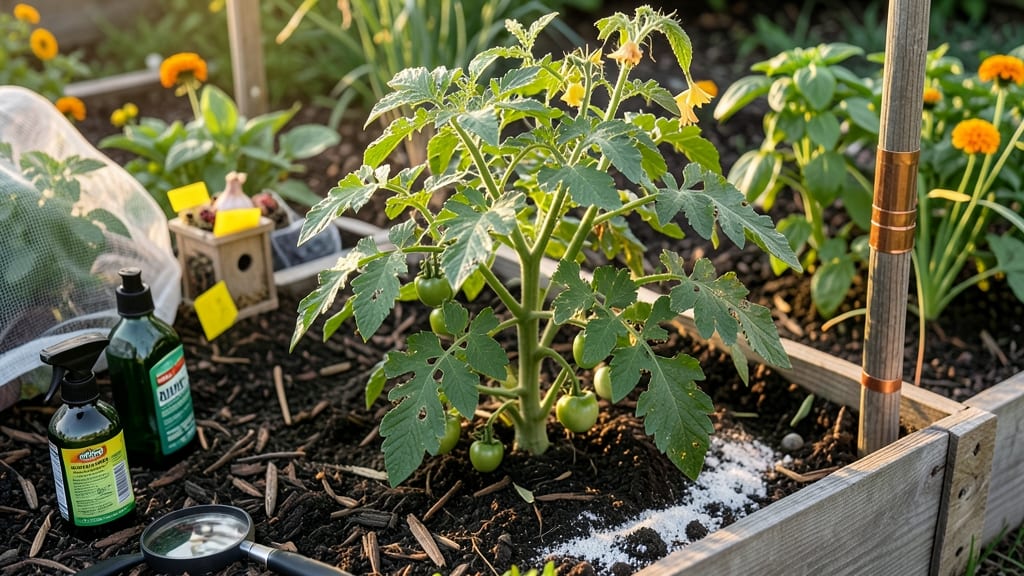
To prevent garden pests, focus on soil health, strategic companion planting, and organic barriers like neem oil or diatomaceous earth. Clear away plant debris, rotate crops annually, and attract beneficial insects to create a balanced ecosystem.
Healthy soil acts as your first line of defense by supporting strong plants that pests avoid. 🌱 The key is maintaining proper pH levels and nutrient balance—think compost tea or mycorrhizal fungi—to boost plant resilience.
Companion planting works by confusing pests with mixed scents or providing habitats for their natural predators, like marigolds deterring nematodes or basil repelling flies.
Organic barriers like neem oil disrupt insect life cycles by mimicking hormones, while diatomaceous earth creates a deadly barrier that dehydrates soft-bodied pests. These methods don't just kill pests—they prevent future infestations by breaking the cycle at its source.
The real magic happens when you combine these strategies with regular garden maintenance, like removing fallen leaves where pests hide over winter.
💡 In This Article
- Science-Backed Natural Pest Prevention Strategies
- Step-by-Step Organic Pest Prevention Plan
Science-backed natural pest prevention strategies
The first line of defense against garden pests is understanding how natural solutions actually work at a biological level. Neem oil, for example, contains azadirachtin—a compound that mimics insect molting hormones, confusing pests like aphids and whiteflies into stopping feeding or dying prematurely.
When applied at a 1% dilution rate (1 tablespoon per quart of water), it creates a protective film on leaves that disrupts their life cycle for up to 14 days.
The key is timing: apply it at dusk when bees are less active, as the strong scent can be harmful to pollinators during daylight hours.
Diatomaceous earth works through a completely different mechanism—its microscopic, glass-like particles create razor-sharp edges that puncture the exoskeletons of soft-bodied insects like slugs and caterpillars. This causes rapid dehydration by damaging their protective wax layer.
For best results, apply a 1/2-inch thick layer around plants and watering areas, reapplying after rain since moisture reduces its effectiveness. Unlike chemical pesticides, diatomaceous earth is harmless to mammals and birds but requires direct contact to work, making it ideal for targeted prevention rather than broad spraying.
Companion planting leverages plant chemistry and ecosystem dynamics. Marigolds, for instance, release alpha-terthienyl—a compound that repels nematodes while attracting predatory wasps that hunt garden pests. The scent disruption works because many pests rely on specific plant odors to locate hosts.
Planting basil near tomatoes confuses whiteflies, while onions and garlic emit sulfur compounds that deter carrot flies. This creates a multi-layered defense where visual cues, scent masking, and predator attraction all work together to reduce pest populations by up to 70% in some cases.
Soil health plays an equally critical role by strengthening plants' natural defenses. Healthy soil teeming with mycorrhizal fungi and beneficial bacteria helps plants produce more defensive compounds like tannins and alkaloids.
A simple soil test can reveal imbalances—aim for a pH between 6.0 and 7.0 for most vegetables, as extreme pH levels stress plants and make them more vulnerable.
Adding compost or worm castings not only improves nutrient availability but also enhances the soil's microbial diversity, creating a hostile environment for many soil-borne pests.
Beneficial insects form the backbone of natural pest control through what scientists call "biological pest suppression." Ladybugs, for example, consume 5,000 aphids in their lifetime, while lacewings target caterpillars and mites. To attract them, plant dill, fennel, or yarrow—their preferred nectar sources.
Even simple changes like leaving some leaf litter or installing a small water source can dramatically increase beneficial insect populations. The most effective gardens maintain a 3:1 ratio of beneficial to pest insects, creating a self-sustaining ecosystem where pests never reach outbreak levels.
What most gardeners overlook is how these methods work synergistically. A healthy soil foundation supports strong plants that companion planting protects, while organic barriers and beneficial insects complete the cycle.
The result isn't just pest reduction—it's a garden ecosystem that becomes more resilient over time, requiring less intervention as the natural balance restores itself. 🌿