
Watering
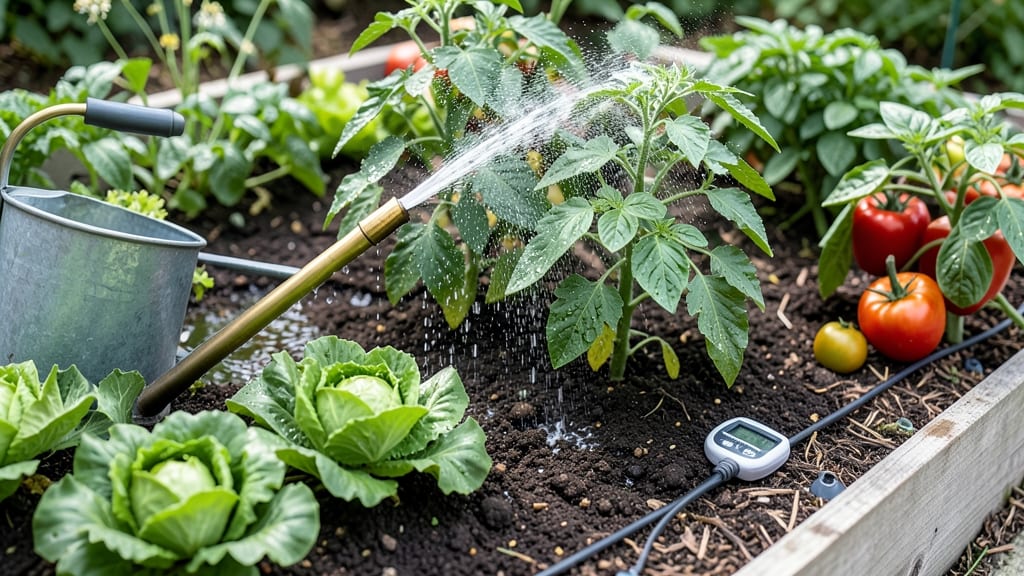
To water a vegetable garden properly, aim for 1 to 2 inches of water per week—deep soaks that reach the root zone, not light sprinkles that dry out fast.
Overwatering or underwatering your 🥕 can turn your hard work into wasted effort—and even kill your plants. The secret to lush, productive crops lies in understanding how much and when to water, not just how often.
Most gardeners guess, but the truth is, soil type, weather, and plant stage all change the equation. Sandy soil drains fast, while clay holds moisture longer—so a one-size-fits-all approach won’t cut it.
Below, I break down the science behind perfect moisture, from the finger test to adjusting for heatwaves, so you never waste a drop—or risk losing your harvest.
The ideal watering schedule for vegetable gardens by soil type and climate
Watering your vegetable garden isn't just about sticking your hose in the dirt—it's a science that balances soil type, climate conditions, and plant needs. Too much water drowns roots, while too little stunts growth.
My 10-year organic garden taught me that loam soil holds moisture perfectly, but sandy soil drains like a sieve, while clay soil clings to water like glue. Let's break down the ideal watering schedules tailored to your garden's unique conditions.
Your local climate plays a huge role—desert gardens need deep, infrequent watering, while humid coastal areas may only need light misting. Even seasonal shifts demand adjustments: summer heat increases evaporation, while winter slows water absorption.
The key is deep watering that encourages roots to grow downward, making plants more resilient. I'll show you how to adjust your routine based on soil type and weather patterns.
Soil type determines how often you water and how much to apply. Sandy soil drains quickly, requiring frequent light watering, while clay soil stays soggy longer, needing less frequent deep watering. Loam soil—the gardener's gold—holds moisture just right. Below is a comparison table showing how to water each type, plus climate-specific adjustments to keep your veggies thriving.
| Soil Type | Watering Frequency | Depth per Session | Hot/Dry Climate | Cool/Humid Climate |
|---|---|---|---|---|
| Sandy Soil | Every 1-2 days | 1-2 inches | Daily, early morning | Every 2-3 days, late afternoon |
| Loam Soil | Every 2-3 days | 1.5-2 inches | Every other day, deep soak | Every 3-4 days, light water |
| Clay Soil | Every 3-4 days | 2-3 inches | Every 3 days, deep water | Weekly, deep soak |
In hot, dry climates, focus on deep watering in the early morning to minimize evaporation and fungal risks. My tomato plants in Arizona wilted until I switched to drip irrigation at dawn.
For cool, humid climates, water lightly in the late afternoon to prevent mildew. I’ve seen leafy greens in Pacific Northwest gardens thrive with just morning misting—no deep soaks needed.
Adjust your schedule based on seasonal rainfall. During summer, I cut back on watering after a 1-inch rain, but in winter, I stick to the minimum frequency since evaporation slows.
Use a rain gauge to track precipitation—it’s a game-changer. Pro tip: Mulch heavily (3-4 inches) to lock in moisture and reduce watering needs by up to 30%.
For container gardens, water more frequently—potted soil dries out 3x faster than in-ground beds. My herb pots need watering daily in summer, while heavy clay pots retain moisture longer. Always check moisture 1 inch below the surface—that’s where roots actively grow.
If it’s dry, water; if it’s damp, wait. This simple trick saved my basil plants from root rot last summer.
Watch for visual cues like wilting leaves or yellowing edges—signs your plants are thirsty. But beware: overwatering causes blossom-end rot in tomatoes or mushroom-like growth at the soil line. I learned this the hard way when my peppers developed blackened bottoms from soggy soil.
Balance is everything. Use a moisture meter for precision, especially in clay-heavy soils where water pools.
Don’t forget root zone hydration. Shallow watering encourages shallow roots, making plants vulnerable to drought. Instead, water until moisture reaches 6-8 inches deep. For deep-rooted crops like carrots or asparagus, aim for 12 inches of penetration.
I use a long screwdriver to check depth—if it slides in easily, you’re golden. If it meets resistance, water more.
Seasonal adjustments are critical. In spring, young seedlings need consistent moisture—think of it as a spa day for roots. By summer, increase frequency but water deeper to combat heat stress. In fall, taper off as plants prepare for dormancy. My <
5 Soil-moisture tricks to water your garden Just Right (Without Guessing)
Watering your vegetable garden can feel like a guessing game—too much and you drown the roots, too little and your plants wilt. The key is checking soil moisture the right way, not just following a rigid schedule.
I’ve tested these simple tricks over years of gardening, and they’ve saved my tomatoes and peppers from both overwatering and thirst.
Most gardeners make two big mistakes: watering based on time (like "every morning at 8 AM") or eyeballing the soil’s dryness. Instead, focus on root zone hydration.
Your plants’ roots need consistent moisture, but surface watering tricks them into thinking they’re getting enough while leaving deeper roots parched. Let’s fix that with five foolproof methods.
- 1. The Finger Test: Stick your index finger 1-2 inches into the soil. If it feels dry, water thoroughly. For sandy soil, check deeper (2-3 inches) since it drains faster.
- 2. Visual Soil Cues: Dark, clumpy soil means it’s moist. Light-colored or powdery soil needs water. Press a handful—if it crumbles easily, it’s dry.
- 3. DIY Bottle Gauge: Bury a plastic bottle (like a soda bottle) with the bottom cut off. Fill it with water; if it’s empty by morning, your soil drains too fast.
- 4. Weight Check: Lift a potted plant—if it feels light, roots are dry. For in-ground gardens, press your foot gently; spongy soil needs water.
- 5. Leaf & Stem Clues: Wilted leaves that perk up after watering = thirsty. Yellowing leaves = overwatering. Drooping flowers often signal underwatering.
Start your watering routine in the early morning (before 10 AM) to reduce evaporation and fungal risks. Avoid nighttime watering—wet foliage overnight invites diseases like powdery mildew. If you’re using a drip irrigation system, set it to deliver water slowly over 30-60 minutes for deep penetration.
For container gardens, check moisture daily since pots dry out faster. Mulch around your plants with straw or wood chips to lock in moisture and keep roots cool.
I’ve seen mulched beds retain 30% more water over two weeks, cutting my watering time in half. Even a thin layer (2-3 inches) makes a difference.
Don’t rely on rain alone—measure it with a rain gauge or empty tuna can. One inch of rain isn’t enough for most vegetables; aim for 1-1.5 inches per week, including rainfall.
Adjust for your local climate: desert gardens need deep, infrequent watering, while humid regions may require daily checks.
Remember, deep watering encourages roots to grow downward, making plants more drought-resistant. Use a soaker hose or watering wand to deliver water slowly to the base of plants. Skip the sprinkler—it wastes water and can spread disease.
With these tricks, you’ll water like a pro, even without fancy tools. Your zucchini and carrots will thank you at harvest time! 🌱