
Light Requirements
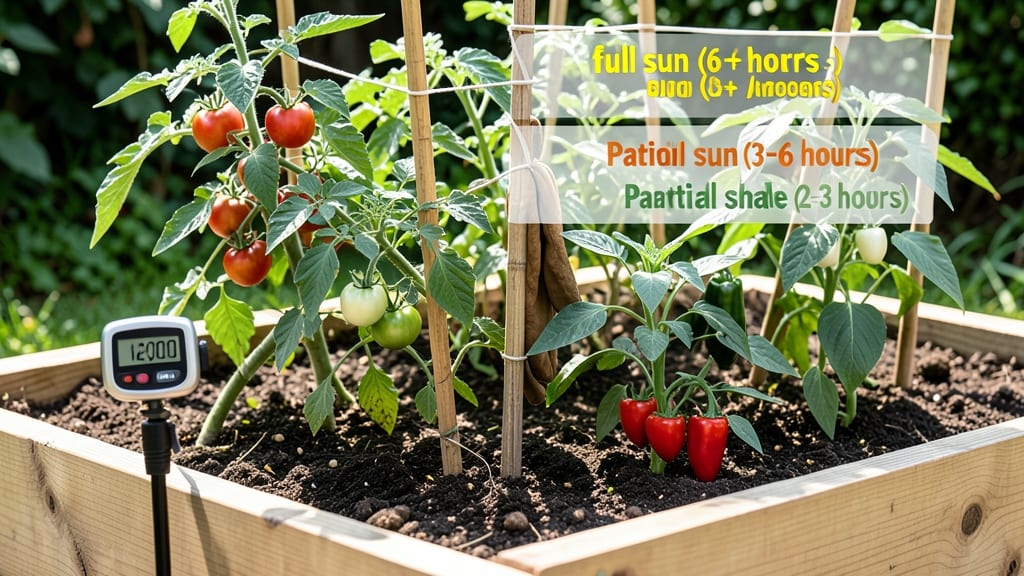
To grow a thriving veggie garden 🥬, you’ll need at least 6 hours of direct sunlight daily—but not all plants demand the same amount, and too much sun can scorch your crops.
Struggling to decide where to plant your tomatoes or lettuce? Sunlight is the single most critical factor for a thriving veggie garden—yet most gardeners get it wrong, leading to poor yields or wasted space.
Some vegetables, like peppers and cucumbers, thrive in full sun (6-8+ hours), while others, such as spinach and kale, do just fine with partial shade (3-6 hours). Without knowing the exact needs, you might end up with leggy plants or bitter greens.
In this guide, I’ll break down the sunlight requirements for your favorite crops, how to measure sunlight in your garden, and pro tips to optimize growth—no guesswork included.

Sunlight requirements by vegetable type: full sun vs. partial shade needs
Sunlight isn't just any growing condition—it's the energy source that determines whether your tomatoes ripen or your basil bolts. Most vegetables thrive with 6+ hours of direct sun, but some, like leafy greens, actually bolt or wilt in too much heat.
Understanding these needs prevents wasted space and poor harvests.
Vegetables fall into three categories: full-sun lovers (6+ hours), partial-sun adaptable (3-6 hours), and shade-tolerant (under 3 hours). Placing them correctly means bigger yields, healthier plants, and fewer struggles. Let's break down the sunlight spectrum for your garden's most common crops.
| Vegetable | Sunlight Needs | Growth Impact | Best For |
|---|---|---|---|
| Tomatoes, Peppers, Eggplant | 6+ hours | Poor fruit set, stunted growth | South-facing beds |
| Beans, Corn, Squash | 6+ hours | Reduced yields, weak stems | Open, sunny areas |
| Basil, Cucumbers, Zucchini | 5-6 hours | Bolting, bitter taste | Morning sun + afternoon shade |
| Carrots, Radishes, Spinach | 3-4 hours | Bitter flavor, slow growth | Dappled shade or morning sun |
| Lettuce, Kale, Swiss Chard | 2-3 hours | Bolting, yellowing leaves | North-facing beds or under trees |
Your tomatoes and peppers are classic full-sun crops, demanding 6+ hours of direct sunlight to produce sweet, flavorful fruits. Without enough light, they'll focus energy on leafy growth instead of fruit production, leaving you with small, bland tomatoes.
These plants thrive in south-facing beds where they receive unfiltered morning and afternoon sun.
On the other hand, leafy greens like spinach and kale are shade-tolerant, preferring 2-3 hours of sun daily. Too much sun causes them to bolt prematurely, turning bitter and tough. These crops are perfect for north-facing beds or areas shaded by taller plants like corn or sunflowers.
For partial-sun crops like basil and cucumbers, aim for 5-6 hours of sunlight. These plants handle afternoon shade better than full sun, especially in hot climates. Without enough shade, their leaves can scorch, and their flavor becomes harsh or bitter.
A trick I use is planting them near trees or fences that provide afternoon relief.
Seasonal shifts matter too. In summer, your garden might get 10+ hours of sun, but in winter, that drops to 4-5 hours. Adjust by moving shade-sensitive crops like lettuce to sunnier spots in winter or providing dappled shade in summer with row covers or cloches.
If you're unsure about your garden's sunlight, observe it for a week. Note which areas get morning sun only, afternoon sun, or full-day exposure. This helps you map your garden for optimal placement.
For example, tomatoes in morning sun with afternoon shade work well in hot climates, while carrots thrive in partial shade.
One common mistake is assuming more sun is always better. Over-exposure can scorch leaves or cause blossom drop in peppers. Balance is key—especially in containers, where sunlight intensity is higher.
How to measure sunlight in your garden and adjust plant placement
Sunlight isn’t just about how much your garden gets—it’s about when and where that light hits. Morning sun behaves differently than afternoon sun, and your yard’s microclimates can create hot spots or shady corners that dramatically affect plant health.
Without measuring sunlight accurately, you might accidentally turn your tomato plants into sad, leafy shadows or scorch your peppers before they ripen.
Start by observing your garden for at least one full week to account for seasonal shifts. Use a simple sunlight tracker—like a white sheet of paper or a sun calculator app—to mark where shadows fall at different times.
This helps you identify morning sun zones (cooler, gentler light) versus afternoon sun zones (intense, drying heat), which can influence everything from watering needs to plant placement.
How to Measure Sunlight Like a Pro
- 🌞 Step 1: Mark Your Garden
Divide your garden into 4 quadrants and label them A, B, C, D. Use stakes or spray paint for visibility. - 📏 Step 2: Track Shadows
Place a 12-inch stake in each quadrant. Measure shadow length every 2 hours from 8 AM to 6 PM for 3 days. - ☀️ Step 3: Categorize Sunlight
- Full Sun (6+ hours): Shadow < 2 inches for 6+ hours
- Partial Sun (3-6 hours): Shadow < 4 inches for 3-6 hours
- Partial Shade (under 3 hours): Shadow > 4 inches for most of the day
- 🌱 Step 4: Adjust Placement
Move sun-loving crops (tomatoes, peppers) to full-sun zones. Place shade-tolerant crops (lettuce, spinach) in partial shade. - 🔄 Step 5: Rotate Seasonally
In summer, move morning sun plants (like basil) to eastern exposures. In winter, shift tender crops to southern exposures for warmth.
Once you’ve mapped your sunlight, use these patterns to strategically place plants. For example, tomatoes and eggplants thrive in full afternoon sun, while leafy greens like kale or Swiss chard can handle morning sun with afternoon shade.
Even herbs like parsley prefer partial shade to avoid bolting (flowering prematurely) in hot climates.
Don’t forget to monitor seasonal shifts. A spot that gets full sun in summer might only receive 3 hours in winter due to lower sun angles. Use seasonal sun calculators (available online) to adjust your layout every 3 months.
This proactive approach ensures your veggie garden stays productive year-round, even as sunlight patterns change.
Pro tip: If your garden has limited full-sun spots, consider reflective surfaces like white gravel or light-colored mulch. These can bounce extra light onto plants, effectively increasing their sunlight exposure by up to 20%.
Pair this with vertical gardening (trellises for cucumbers or beans) to maximize space in shadier areas.
With these tools and techniques, you’ll transform your garden from a guesswork experiment into a precision-grown paradise, where every plant gets exactly the sunlight it craves. Happy gardening! 🌿