
Light Requirements
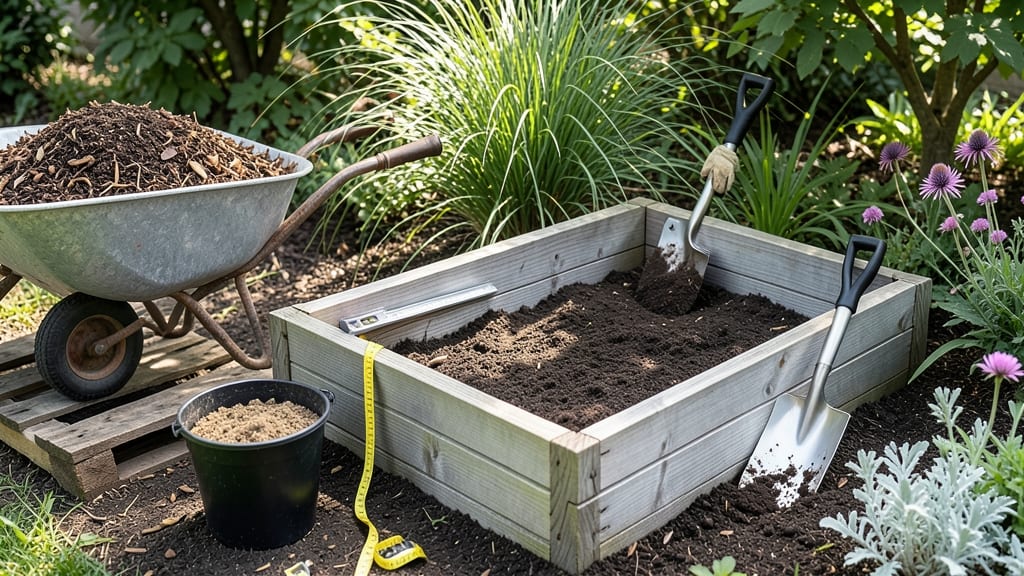
Filling a raised garden bed with the right amount of soil means giving your plants the space to grow strong roots and thrive 🌱—and the depth you need depends more on what you’re planting than you might think.
Picture this: You’ve spent hours building your perfect raised bed, only to realize halfway through filling it that you’ve either gone way too deep or left barely enough room for your carrots to stretch their legs.
That’s why knowing the exact soil depth for your plants isn’t just helpful—it’s the difference between a bumper crop and a disappointing harvest.
Most vegetables need at least 6 inches of soil, but deep-rooted crops like potatoes or tomatoes demand 12 inches or more to reach their full potential. Herbs and shallow-rooted greens, on the other hand, can thrive in just 6-8 inches.
The key is balancing depth with drainage, so your soil mix stays loose and airy while holding onto nutrients.
In this guide, I’ll break down the ideal soil depth for every type of plant, how to calculate exactly how much soil you need for your bed’s dimensions, and the best mix to use—whether you’re working with a 6-inch herb bed or a 12-inch vegetable tower.
No guesswork, just proven results for a healthier, happier garden.
Raised garden bed soil depth requirements by plant type
When filling your raised garden bed, the soil depth directly impacts root growth and plant health. Different plants have unique needs—deep-rooted vegetables like carrots require 12+ inches, while shallow-rooted herbs like basil thrive in just 6-8 inches.
Understanding these requirements ensures your plants get the space they need to flourish without overfilling your bed or wasting soil.
Most raised beds are built to a standard height of 6-12 inches of soil, but this isn’t one-size-fits-all. For example, tomatoes and asparagus demand deeper soil to support their extensive root systems, while strawberries and lettuce can thrive in shallower layers.
The key is matching the root depth of your chosen plants to the soil depth in your bed.
Here’s a breakdown of how much soil to fill your raised garden bed based on the types of plants you’re growing, including practical measurements and root depth science to guide your decisions.
| Plant Type | Minimum Soil Depth | Ideal Soil Depth | Root Depth | Notes |
|---|---|---|---|---|
| Vegetables (Deep Roots) | 12 inches | 18-24 inches | 12-36 inches | Carrots, potatoes, asparagus, tomatoes |
| Vegetables (Moderate Roots) | 8 inches | 12-16 inches | 6-12 inches | Peppers, cucumbers, beans, squash |
| Herbs (Shallow Roots) | 6 inches | 8-12 inches | 3-6 inches | Basil, parsley, cilantro, chives |
| Fruits (Moderate to Deep Roots) | 12 inches | 18-24 inches | 12-24 inches | Strawberries, blueberries, raspberries |
| Flowers (Shallow to Moderate Roots) | 6 inches | 8-12 inches | 3-12 inches | Marigolds, pansies, zinnias, lavender |
For deep-rooted vegetables like carrots or asparagus, aim for 18-24 inches of soil depth. These plants need ample space to develop their extensive root systems, which can extend 2-3 feet deep in some cases.
If your raised bed isn’t deep enough, consider planting these varieties in dedicated deep pockets or using container gardening for individual plants.
On the other hand, shallow-rooted herbs like basil or thyme only require 6-8 inches of soil. Overfilling your bed with excess soil for these plants can lead to poor drainage and root rot, especially if the soil mix isn’t well-aerated.
Stick to the minimum depth for these varieties to avoid unnecessary waste and potential issues.
When planning your raised garden bed, consider layering soil types to optimize growth. For example, the top 6 inches can be a nutrient-rich mix of compost and topsoil, while the lower layers can include coarser materials like perlite or sand to improve drainage.
This approach ensures that root zones have the right balance of moisture and aeration at every depth.
Another critical factor is the soil composition. A mix of 60% topsoil, 30% compost, and 10% perlite or sand works well for most plants. This blend provides the organic matter needed for fertility while preventing compaction.
For sandy soils, add more organic matter to retain moisture, and for clay-heavy soils, incorporate sand or vermiculite to improve drainage.
If you’re growing multiple plant types in the same raised bed, prioritize the deepest-rooted plants in one section and shallower varieties in another. This way, you can tailor the soil depth to each plant’s needs without compromising the overall structure of your bed.
How to calculate soil volume for your raised garden bed
Calculating the exact amount of soil needed for your raised garden bed might seem intimidating, but it’s actually a straightforward process that saves you time and money 🌱. Too little soil means stunted plants, while too much leads to wasted resources.
The key is measuring your bed’s dimensions accurately and understanding how to convert those measurements into cubic feet of soil—then adjusting for your specific plants’ depth needs.
Let’s say you’ve built a raised bed that’s 4 feet long, 2 feet wide, and you want to fill it with 10 inches of soil for your tomatoes and peppers.
Without the right calculations, you might end up buying too little (and scrambling at the store) or too much (and dealing with excess soil that won’t fit). I’ll walk you through the exact steps to avoid these mistakes and ensure your bed is perfectly prepped for planting.
-
Step 1: Measure Your Bed’s Dimensions
Grab a tape measure and record your bed’s length, width, and desired soil depth in feet. For example, a 4’ x 2’ bed with 10” of soil.
-
Step 2: Convert Depth to Feet
Since 12 inches = 1 foot, convert your depth to feet. 10” = 10 ÷ 12 = 0.83 feet.
-
Step 3: Calculate Volume in Cubic Feet
Multiply length × width × depth: 4’ × 2’ × 0.83’ = 6.64 cubic feet of soil needed.
-
Step 4: Adjust for Soil Settling
Soil settles over time. Add 20-30% more to your total. For 6.64 cubic feet, buy 8-10 cubic feet of soil.
-
Step 5: Check Bag Sizes
Most bags list volume in cubic feet. For 8 cubic feet, you’d need 2 bags of 4 cubic feet each.
One common mistake gardeners make is ignoring the soil type when calculating volume. For instance, compost-heavy mixes settle more than sandy loam, so always err on the side of buying extra. Another pitfall is assuming your bed’s height equals soil depth—subtract any landscape fabric or drainage layers from your total.
Pro tip: If your bed has uneven edges or curves, break it into rectangles and calculate each section separately. For a circular bed, use the formula for the area of a circle (πr²) and multiply by depth.
For example, a 3-foot diameter bed with 8” of soil would need about 1.88 cubic feet of soil.
Once you’ve nailed down the volume, consider the soil mix itself. A blend of 60% topsoil, 30% compost, and 10% perlite works for most vegetables, but herbs like thyme or oregano thrive in shallower, well-draining mixes.
Always label your soil bags with the mix ratio to avoid confusion later in the season.