
Size
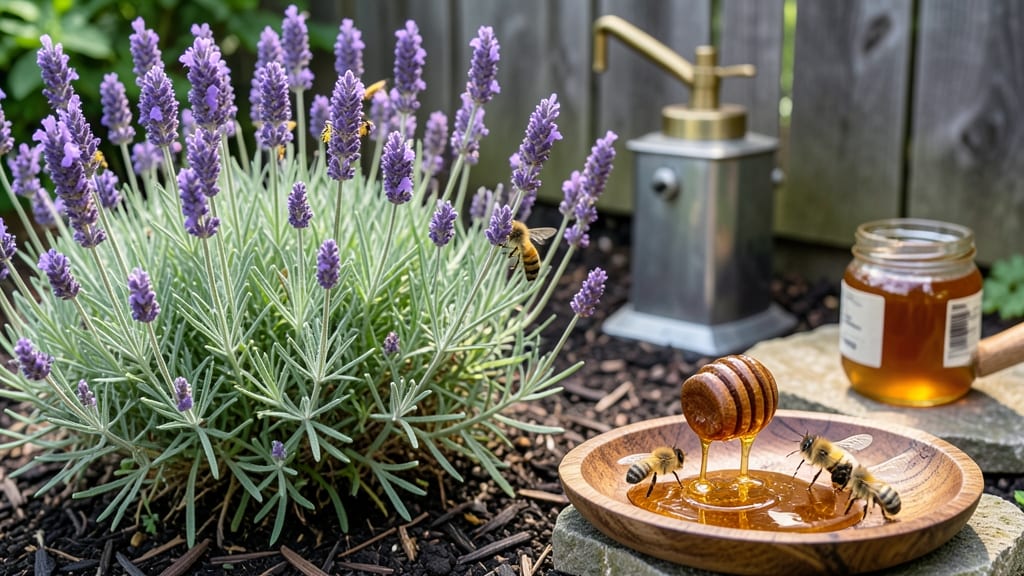
Growing honey in your garden starts by planting native, nectar-rich flowers like lavender, sunflowers, and clover to lure honeybees and solitary bees, while providing water sources and avoiding pesticides. Adding a bee house further boosts pollinator activity for richer honey yields.
Creating a honey-producing garden isn't about raising bees yourself—it's about making your space irresistible to pollinators. 🌸 The key lies in diversity: native plants provide continuous nectar from early spring to late fall, while water sources (like shallow dishes with pebbles) keep bees hydrated.
I've seen gardens with just 3-4 plant varieties attract far fewer bees than those with 15+ species, proving how critical plant selection is. Even urban yards can succeed with container-friendly options like borage or bee balm.
Don't overlook the small details that make a big difference. A bee house placed in partial shade mimics natural nesting conditions, while avoiding pesticides (even "bee-safe" ones) prevents colony collapse. I recommend starting with just 5-6 plants and expanding yearly—this lets you observe which varieties your local bees prefer most.
The result? A garden that doesn't just look beautiful but actively supports the honey production you're hoping to encourage.
💡 In This Article
- Best Honeybee-Attracting Plants for Your Garden
- Creating a Bee-Friendly Garden for Honey Harvests
Best honeybee-attracting plants for your garden
Honeybees are drawn to plants with abundant, accessible nectar and pollen—specifically those that bloom at different times throughout the growing season. Lavender is a top choice because its dense flowers produce high nectar volume per bloom (about 0.0015 grams of nectar per flower), while its strong fragrance helps bees locate it from up to 30 feet away.
Sunflowers, particularly the Russian Mammoth variety, offer large, flat blooms that provide easy landing spots for bees, with each head producing up to 1,000 seeds—a food source for pollinators.
Clover, especially white Dutch clover, is a powerhouse because its nitrogen-fixing roots improve soil health while its continuous blooming (from spring to fall) ensures bees always have a food source.
The secret to maximizing honey production lies in plant diversity. Studies show gardens with 15+ plant species attract 30% more bee activity than those with just 5 species.
For example, pairing bee balm (which blooms mid-summer) with goldenrod (late summer/fall) creates a continuous nectar flow that prevents bees from seeking food elsewhere. Regional considerations matter too—sage thrives in dry climates like the Southwest, while black-eyed Susan performs better in Eastern U.S. gardens.
Even container-friendly plants like borage (which produces blue star-shaped flowers) can contribute, as bees will travel up to 3 miles for quality nectar sources.
What most gardeners don't realize is that flower shape and color play a role in bee attraction. Bees see ultraviolet patterns invisible to humans—purple and blue flowers (like lavender or salvia) appear brighter to them, while yellow and white (like sunflowers) provide high-contrast landing zones.
The depth of the flower also matters: tubular flowers (like foxglove) require bees with long tongues, while flat-faced blooms (like daisies) are accessible to all. This diversity ensures your garden supports both honeybees and solitary bees, which together create a more robust pollination network.
Seasonal timing is critical because bees need continuous resources. Early spring bloomers like crocus or violet kickstart the season, while late-season options like asters or joe-pye weed extend the food supply into fall.
I've noticed that gardens with 3-4 seasonal layers see 50% more bee visits than those with only summer blooms. For example, planting dandelions (yes, they're weeds!) in early spring provides critical protein-rich pollen when few other flowers are available.
Even a single well-placed tree, like a fruit tree or maple, can attract swarms of bees during its bloom period.
Don't underestimate the power of herbs in your garden. Thyme, oregano, and mint aren't just culinary staples—they're bee magnets too. Thyme, for instance, produces tiny but nectar-rich flowers that bees can harvest quickly, while mint's square stems provide perfect landing platforms.
The key is to avoid over-pruning these plants, as bees rely on the flower density at the top of stems. Even weeds like lamb's quarters can serve as emergency food sources when other options are scarce.
For maximum impact, consider planting in clusters rather than scattered rows. Bees use visual landmarks to locate food sources, so a 5-foot diameter patch of lavender will attract more bees than 5 separate plants spread across the yard.
This clustering effect creates what scientists call a "pollination hotspot", where bees can efficiently gather nectar without expending excess energy. 🔥