
Tools
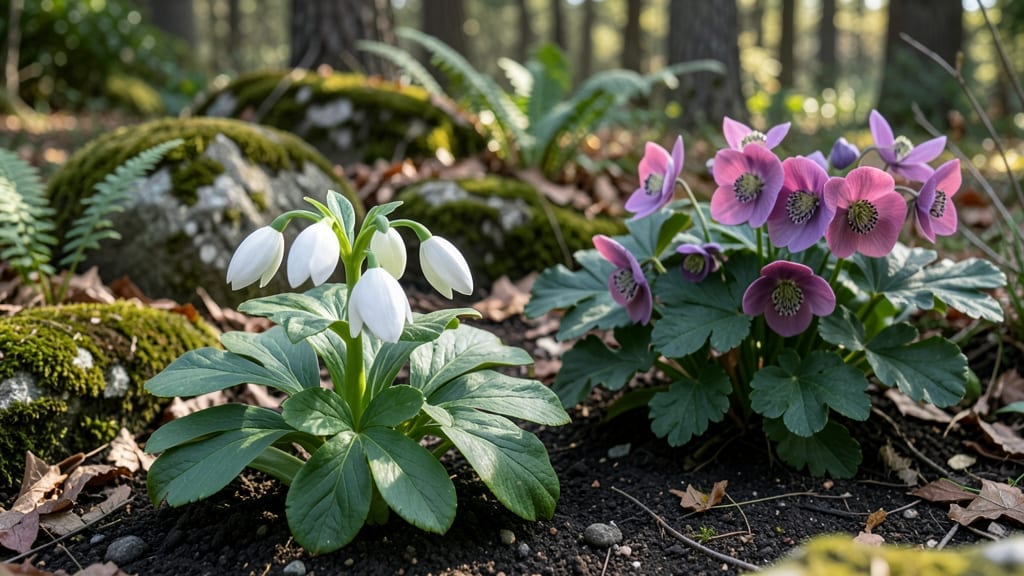
Hellebores in garden spaces stand out as graceful perennials that flourish in shade, offering vibrant blooms from late winter through spring with surprisingly low maintenance once settled in—just ensure they get well-draining soil and occasional division to keep them thriving.
These evergreen plants are nature's understated stars, perfect for gardeners who want year-round interest without fuss. 🌿 Their deep roots and broad leaves make them uniquely efficient at capturing light in shady spots, often outperforming other shade lovers like hostas or ferns.
I've found they reward patience—plant them in the right spot, and they'll return with bold blooms year after year with minimal intervention.
What really sets hellebores apart is their winter hardiness. While many perennials go dormant in cold months, hellebores often bloom through light snowfall, creating a stunning contrast against bare branches. Their foliage remains attractive even when not in bloom, making them a true four-season plant.
For best results, I recommend planting them in groups of three or more to create visual impact while keeping maintenance simple.
💡 In This Article
- Why Hellebores Excel in Shady Garden Spaces
- Step-by-Step Hellebore Planting and Maintenance Guide
Why hellebores excel in shady garden spaces
Hellebores have evolved a clever botanical strategy for thriving in low-light conditions. Their broad, leathery leaves contain a high concentration of chlorophyll, which allows them to capture even minimal sunlight efficiently.
Unlike many shade-loving plants that rely on large leaf surfaces to maximize light absorption, hellebores optimize their leaf structure with a waxy coating that reduces water loss while maintaining photosynthesis efficiency in 20-50% shade—far less than what hostas or ferns typically require.
The real secret lies in their deep root systems, which can extend 12-18 inches below the surface to access moisture and nutrients that other shallow-rooted plants miss. This adaptation lets them survive in areas where other perennials would struggle.
Their roots also store carbohydrates, providing energy reserves during dormancy—a key reason they bloom so reliably in early spring when soil nutrients are scarce. 🌱 What's fascinating is how their flowers often face downward, a trait that helps them collect more light while protecting the delicate petals from heavy rain.
When comparing hellebores to other shade plants, their tolerance stands out. Hostas, for example, need 30-60% shade to prevent leaf scorch, while ferns require consistent moisture and 40-70% shade to thrive.
Hellebores, however, handle deep shade (under trees) with ease, making them ideal for woodland gardens or north-facing beds where other plants might fade. Their ability to photosynthesize at lower light intensities means they won't yellow or weaken like many competitors when light levels drop below 1,000 foot-candles.
Another advantage is their evergreen foliage, which continues producing energy through winter. While many perennials go completely dormant, hellebores maintain a slow but steady metabolic rate, giving them a head start when spring arrives. This persistence explains why they often outperform annuals or tender perennials in shady spots.
The trade-off? Their slower growth rate means they establish more gradually, but once settled, they become nearly indestructible in the right conditions.
For gardeners working with limited light, hellebores offer a unique solution. Their ability to bloom in full to partial shade—even under 30% canopy coverage—means they can transform dull corners into focal points.
Unlike hostas that may develop fungal issues in damp shade or ferns that require precise moisture levels, hellebores adapt to a wider range of microclimates while maintaining their elegant appearance year-round. 💫
What most people don't realize is how their root systems interact with soil microbes. Hellebores form beneficial relationships with mycorrhizal fungi, which help them access phosphorus and other nutrients in compacted or nutrient-poor soils—a major advantage in shaded areas where decomposition slows.
This symbiotic relationship explains why they often thrive in spots where other plants would struggle, even without additional soil amendments.
If you're considering adding hellebores to your garden, focus on areas where other plants have failed. Their ability to handle dry shade (once established) makes them perfect for understory planting, while their winter blooms provide color when little else is available.
The key is patience—their first few years focus on root development, but once they're settled, they'll reward you with decades of low-maintenance beauty.