
Container Gardens
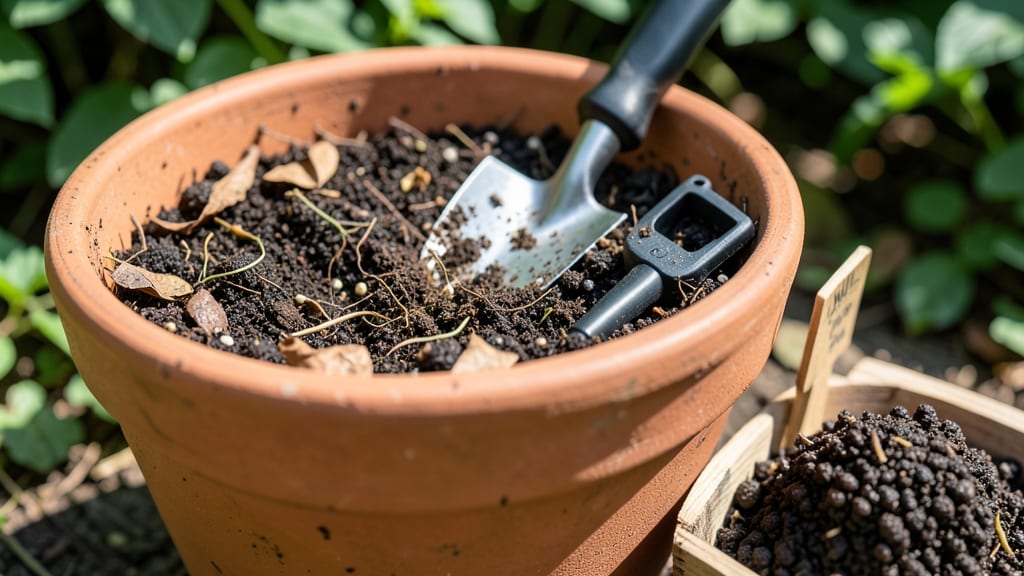
For garden soil in pots, use a lightweight blend of 60% organic matter (like peat moss or coconut coir), 30% perlite or vermiculite, and 10% compost to ensure proper drainage and root health. Regular garden soil compacts too easily in containers, leading to poor aeration and root rot.
Regular garden soil is too heavy and dense for container gardening, which is why a custom mix is essential. 🌱 The organic components provide nutrients, while perlite or vermiculite create air pockets that prevent waterlogging—a common killer of potted plants.
I've found that adding a handful of coarse sand (about 5%) to mixes for cacti or succulents further improves drainage without sacrificing moisture retention for thirstier plants.
This blend works because it mimics the natural conditions plants prefer: loose, well-aerated soil that allows roots to breathe while still holding enough moisture. The compost component adds beneficial microbes that break down organic matter, creating a self-sustaining ecosystem in your pots.
For tropical plants like ferns or calatheas, you might increase the organic matter to 70% and reduce the perlite to 20% to retain more moisture.
💡 In This Article
- Why Potted Plants Need Special Soil Mixes
- DIY Potting Soil Recipes for Different Plant Types
Why potted plants need special soil mixes
Regular garden soil is designed for in-ground planting, where roots can spread freely and excess water drains downward through layers of subsoil. In pots, however, there's no escape route for water—when you overwater, the roots suffocate in soggy, compacted soil.
The key issue is poor aeration: dense soil blocks oxygen from reaching roots, which is why plants in heavy garden soil often develop root rot within weeks.
A proper potting mix solves this by incorporating 30% perlite or vermiculite, tiny mineral particles that create air pockets while still allowing water to flow through.
The science behind this involves capillary action—how water moves through soil. In garden soil, clay particles bind tightly, creating tiny channels that trap water and prevent oxygen circulation.
Potting mixes disrupt these channels with coarse additives: perlite expands when heated, creating lightweight bubbles that hold air, while vermiculite retains moisture but releases it gradually. 🌱 For example, a mix with 1 part perlite to 2 parts peat moss can hold up to 30% more air than garden soil, which is critical for root respiration.
Without this airflow, roots can't absorb nutrients efficiently, leading to stunted growth.
Another critical factor is moisture retention vs. drainage. Garden soil holds water like a sponge, while potted plants need a balance—enough moisture to stay hydrated, but quick drainage to prevent drowning.
Organic matter like coconut coir (a sustainable peat alternative) absorbs water while breaking it down slowly, while perlite ensures excess water drains within 15-30 minutes after watering. This dual system mimics the natural conditions of forest floors, where plants thrive in loose, nutrient-rich layers rather than compacted earth.
Nutrient availability also shifts dramatically in containers. Garden soil contains years of decomposed organic material, but in pots, nutrients deplete faster because there's less volume for roots to explore. That's why 10% compost is essential—it introduces microbes that break down organic matter on demand, replenishing nutrients like nitrogen and phosphorus.
For example, a worm casting boost (about 5% of the mix) adds slow-release nitrogen, which is perfect for leafy greens or herbs growing in pots. Without this, plants quickly become nutrient-deficient, even if you're fertilizing regularly.
Let’s talk about texture differences. Garden soil feels dense and cool to the touch, while a good potting mix is light and crumbly, almost like a fluffy cake batter. This texture isn’t just about feel—it’s about root penetration.
In dense soil, roots struggle to grow beyond a 1-inch radius from the pot’s edges, limiting the plant’s access to resources. A well-amended potting mix allows roots to spread 3-4 times farther, giving plants the room to thrive.
For instance, a tomato plant in garden soil might only develop roots in the top 2 inches, while the same plant in a proper mix can explore the full pot depth.
Finally, consider the pH balance. Garden soil often has a neutral pH (6.5-7.5), but potted plants—especially acid-lovers like blueberries or azaleas—may need adjustments. A potting mix with sphagnum peat moss (pH 3.8-4.5) can lower soil acidity, while calcitic lime (added sparingly) raises it.
Without controlling pH, essential nutrients like iron or manganese become locked away, even if they’re present in the soil. 💫 This is why tailored mixes matter: a succulent mix might include pumice for extra drainage, while a fuchsia mix prioritizes orchid bark to retain moisture and mimic tropical humidity.