
Tools
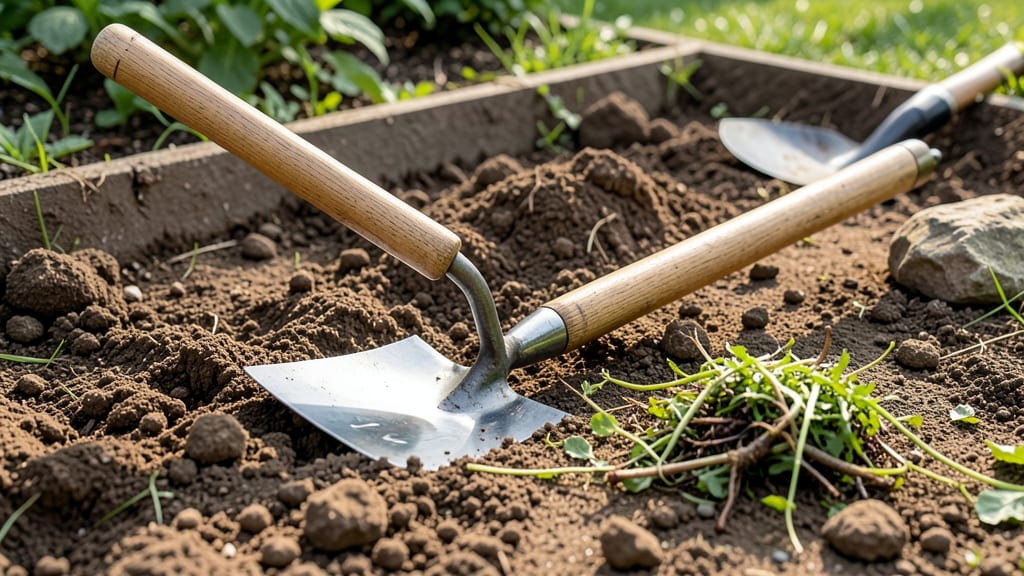
A garden hoe has countless uses beyond weeding—it chops soil, cultivates beds, harvests root crops, levels ground, and creates planting furrows. The right blade shape even helps break up compacted earth or uproot stubborn weeds efficiently.
A garden hoe's real power comes from its blade design, which lets you tackle everything from soil prep to harvest tasks. 🌱 The angled blade of a draw hoe slices through weeds at the base while aerating the soil, while stirrup hoes let you chop and turn earth without bending over.
I've used mine to create clean planting rows in raised beds or even scrape off thick mulch layers when renovating garden sections.
Don't overlook its versatility for maintenance tasks—it's perfect for edging flower beds with precision or clearing debris from pathways. The sturdy blade can even help harvest potatoes by gently lifting them from the soil without damaging the tubers.
For compacted areas, I make quick passes with the hoe to break up the hardpan before planting.
💡 In This Article
- How a Garden Hoe’s Blade Design Enhances Soil Work
- 12 Unexpected Ways to Use a Garden Hoe in Your Yard
How a garden hoe’s blade design enhances soil work
The blade angle of a garden hoe isn't just about looks—it's engineered for specific soil interactions. A draw hoe features a long, flat blade at a 45-degree angle, designed to slice horizontally through soil and weeds while leaving the surface relatively undisturbed.
This angle creates minimal soil displacement, making it perfect for aerating compacted earth without turning over the top layer. When you drag it through your garden, the blade lifts and breaks up hardpan while its flat edge shears weed roots cleanly at the soil line.
In contrast, a stirrup hoe has a shorter, vertical blade that chops soil vertically, creating a fine, granular texture ideal for seedbeds. The blade's 1-2 inch width lets you work in tight spaces, and its upward motion helps loosen soil without inverting it—critical for maintaining soil structure.
For example, when preparing a 10x10-foot raised bed, I use the stirrup hoe to chop through the top 3-4 inches of soil, creating a loose, crumbly layer perfect for planting carrots or radishes without disturbing their straight growth habit.
The blade's material and thickness also matter—carbon steel blades are sharper but rust faster, while stainless steel lasts longer but requires more force. A 1/8-inch thick blade flexes slightly, which helps it cut through tough roots without snapping.
For hilling potatoes or creating planting furrows, the blade's weight helps it glide through soil, while its edge creates clean, 1-2 inch deep trenches for seeds or transplants. This precision reduces soil disturbance compared to a shovel, preserving beneficial microbes and moisture.
Consider the handle length too—longer handles (30-40 inches) reduce strain on your back during long sessions, while shorter ones (24 inches) offer better control for detailed work. The D-handle design on many hoes provides a comfortable grip and helps maintain blade alignment.
When breaking up compacted clay soil, I angle the blade slightly deeper and use a rocking motion to shatter hardpan layers, which improves drainage and root penetration for future plants.
For specialized tasks like trench digging, a wide-blade hoe (like a Dutch hoe) lets you create 6-8 inch deep furrows for planting rows. The blade's width distributes pressure, making it easier to cut through roots and soil without requiring excessive force.
This is particularly useful when installing irrigation lines or planting deep-rooted crops like asparagus. The key is to keep the blade sharp—dull edges tear soil and roots, while a keen edge makes clean cuts that minimize soil disruption.
What most gardeners don't realize is how the blade's curved edge can help with weed suppression. When you drag the hoe just below the soil surface, the curve lifts weeds while leaving the soil intact.
This is especially effective for broadleaf weeds like dandelions, where the blade severs the taproot without leaving fragments behind. For grassy weeds, a vertical chopping motion with a stirrup hoe is more effective, as it severs the rhizomes below ground level.