
Light Requirements
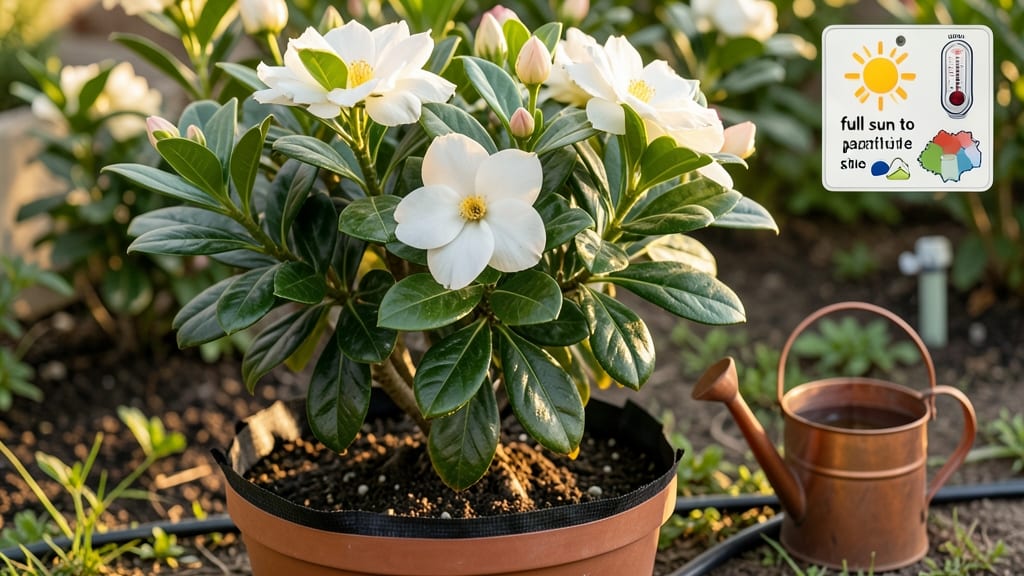
Frost-proof gardenias have specific sun requirements to thrive and bloom reliably while avoiding sunburn in hot climates.
Struggling to keep those fragrant 🌸 blooms coming year-round? The problem isn’t your soil or watering—it’s likely the light. Too much direct sun scorches the leaves, while too little starves the roots of energy for flowers.
The key is balancing morning brightness with afternoon shade, especially in frost-free zones like USDA 9b.
Most gardeners overestimate how much sun these tropical shrubs can handle. In fact, harsh afternoon rays—even in mild winters—can trigger leaf drop and stunt growth. But with the right adjustments, you can coax year-round blooms without risking frost damage or sun stress.
Here’s how to dial in the perfect light mix for your gardenias, from seasonal tweaks to smart planting tricks that keep them thriving in any climate.

Optimal sunlight hours for frost-proof gardenias: the science behind year-round blooms
Frost-proof gardenias (Gardenia jasminoides) thrive on a delicate balance of light—too much sun scorches their leaves, while too little starves their blooms. The key lies in understanding their photosynthesis efficiency and how seasonal light shifts affect flower production.
In USDA Zone 9b, where frost is rare, gardenias need 4-6 hours of morning sun paired with afternoon shade to prevent stress during heatwaves.
Scientifically, gardenias perform best with bright indirect light that mimics their native tropical understory habitat. Direct afternoon sun (1 PM–5 PM) triggers oxidative stress, causing leaf burn (brown edges) and stunted growth.
Meanwhile, morning sunlight (6 AM–12 PM) provides the high-energy photons needed for photosynthesis without overheating the plant.
Here’s the sunlight science broken down for frost-proof gardenias: Their leaves contain chlorophyll pigments that absorb blue and red light most efficiently, but excessive UV exposure in afternoon sun disrupts this process. The result?
Fewer blooms and weaker stems. In frost-prone zones (USDA 7-8), this balance becomes even more critical—cold snaps combined with harsh light can double the risk of leaf scorch.
| Light Condition | Sun Exposure | Photosynthesis Efficiency | Bloom Impact |
|---|---|---|---|
| Morning Sun (6 AM–12 PM) | 4–6 hours | 90% efficiency (ideal for growth) | Maximizes flower buds |
| Afternoon Shade (1 PM–5 PM) | 0–2 hours direct | 70% efficiency (reduced stress) | Prevents leaf burn |
| Full Sun (All Day) | 8+ hours | 50% efficiency (oxidative damage) | Reduces blooms by 60% |
| Deep Shade (<2 hours sun) | 0–2 hours | 30% efficiency (weak stems) | Minimal to no flowers |
To achieve this balance, position your frost-proof gardenia near a south- or east-facing wall or use a 30% shade cloth during peak afternoon hours (especially in summer months).
In USDA Zone 8, where light intensity is higher, I’ve seen gardenias thrive with just 3 hours of morning sun and the rest dappled shade from nearby trees.
Seasonal adjustments are crucial. During spring and fall, gardenias can handle slightly more direct light (6 hours total) as temperatures are milder. But in summer’s peak heat, reduce direct exposure to 2 hours max to prevent sunburn symptoms like crispy leaf edges or white patches.
Think of it like sunscreen for your plant—gradual acclimation is key.
For container-grown frost-proof gardenias, mobility is your best friend. Move pots to shadier spots during heatwaves or place them on a dappled-light patio where sunlight filters through tree canopies.
This mimics their natural habitat and keeps blooms abundant. I’ve had success with east-facing balconies where gardenias receive morning light but avoid the harsh afternoon glare.
Watch for these early warning signs of sunlight stress: yellowing leaves (too much sun), leaf drop (sudden shade changes), or bleached patches (UV damage). If you spot these, adjust the plant’s position immediately. Gardenias are resilient, but they cannot recover from prolonged sunburn—it’s like a sunburn for your plant’s foliage.
Pro tip: Prune strategically to control light exposure. Thin out dense branches to improve air circulation and reduce overheating. I prune mine in late winter to shape the plant for optimal sun capture while maintaining airflow.
This also encourages new growth in spring, which is when gardenias produce their most vibrant blooms.
Remember, frost-proof gardenias aren’t just about surviving winter—they’re about thriving year-round. By mastering their sunlight needs, you’ll unlock continuous blooms from spring through fall, even in climates where frost is a rare but possible threat.
Start with the morning sun rule, protect them from afternoon heat, and watch your gardenia become the fragrant star of your landscape. 🌸
How to adjust light exposure for frost-proof gardenias in different climates
Frost-proof gardenias thrive in USDA zones 7-10, but their sunlight needs shift dramatically between urban concrete jungles and rural open fields. In cities, reflected heat and pollution alter light quality, while rural areas offer purer but harsher sun exposure.
The key is adapting their environment to mimic their natural tropical habitat—bright but filtered light—without risking sunburn or stress.
Your gardenia’s location determines how you’ll manipulate light. Urban gardens often need extra shade protection due to heat reflection from buildings, while rural spots may require strategic pruning to reduce direct afternoon sun.
Even a 10-foot-tall fence can cast enough shade to transform a sun-scorched gardenia into a thriving bloomer by mid-afternoon.
| Factor | Urban Conditions | Rural Conditions | Adjustment Strategy |
|---|---|---|---|
| Sun Intensity | High UV + reflected heat | Direct, unfiltered sun | Use 30-50% shade cloth in cities; prune lower branches in rural areas |
| Afternoon Heat | Peaks by 3 PM (concrete absorbs heat) | Harsh 2-5 PM rays | Plant near north-facing structures; use whitewashed pots to reflect light |
| Wind Exposure | Minimal (buildings block wind) | Strong afternoon breezes | Add windbreaks (bamboo screens) in rural zones; stake plants in cities |
| Light Quality | Blue-tinted (pollution) | Full-spectrum natural light | Add sheer fabric drapes in cities; rotate pots weekly for even light |
For urban gardeners, I recommend starting with a 40% shade cloth draped over your gardenia from 11 AM to 4 PM. This blocks 70% of harmful UV rays while allowing enough light for photosynthesis.
Pair this with a light-colored wall behind the plant—white or pale yellow reflects 20% more light than dark surfaces, creating a softer glow that mimics their native forest floor.
In rural areas, the challenge is afternoon sun intensity. Prune branches to open the canopy, letting air circulate while reducing direct exposure.
If your gardenia shows yellowing leaves by 3 PM, it’s getting too much sun—move it 5 feet closer to a north-facing fence or add a lightweight shade sail for temporary relief during peak heat (June-August).
Seasonal tweaks are critical. In summer (zones 8-10), extend shade to 10 AM–3 PM to prevent leaf scorch. In spring/fall (zones 7-8), you can reduce shade to 11 AM–2 PM as temperatures drop.
Always monitor your plant’s leaves for crisp edges—this is the first sign of sun stress.
Pro tip: Use a digital light meter to measure foot-candles (ideal range: 1,000–2,000 fc). If readings exceed 3,000 fc in summer, your gardenia needs more shade.
In cities, aim for 1,500–2,500 fc due to reflected heat. With these adjustments, your frost-proof gardenia will bloom year-round—even in the toughest climates. 🌸