
Tools
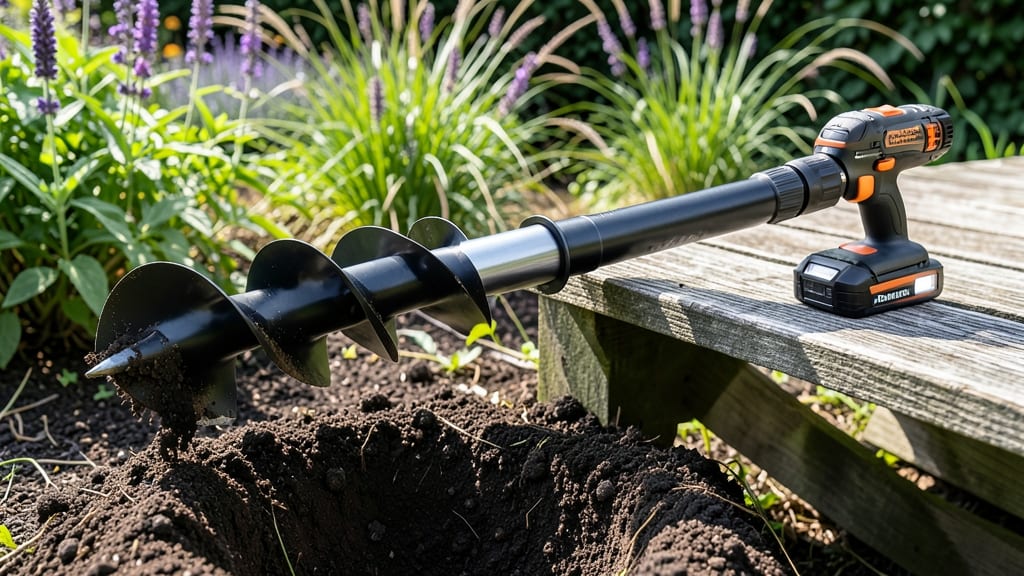
Garden drill attachments transform your power drill into essential tools for planting, soil aeration, and outdoor construction, featuring specialized bits like augers for holes, spade bits for digging trenches, and screw-in anchors for securing stakes or trellises. Select the right attachment based on your project's material and efficiency needs.
These attachments work by adapting your drill's torque and speed to specific garden tasks, making heavy-duty work like planting trees or installing drainage systems far easier. 🔥 For example, auger bits create precise holes for saplings, while spade bits efficiently slice through soil for trenching.
The key is matching the attachment material—carbon steel for wood, cobalt for hard metals—to avoid wear and tear.
Beyond basic planting, garden drill attachments handle everything from creating aeration holes in lawns to securing fencing posts. For instance, screw-in anchors provide a sturdy hold for lightweight structures, while extension rods let you reach deeper or wider without losing power.
I always recommend checking your drill's RPM limits before tackling tough materials like concrete.
💡 In This Article
- How Garden Drill Attachments Work for Soil and Planting Tasks
- Top 5 Drill Attachments for Gardeners and Their Ideal Uses
How garden drill attachments work for soil and planting tasks
Garden drill attachments function by converting rotational force into precise mechanical actions tailored for soil manipulation. Auger bits, for example, feature helical blades that spiral through soil, creating clean holes for planting saplings or installing drainage pipes.
The pitch and diameter of these blades determine how efficiently they cut through different soil types—fine sandy soil requires less torque than dense clay, where a deeper-pitched auger with 1/2-inch to 1-inch diameter excels by reducing friction and heat buildup. 🔥
The key lies in how each attachment interacts with soil composition. Spade bits, designed for trenching, have sharp, flat edges that slice through soil like a knife, ideal for creating furrows for irrigation systems.
Their carbon steel construction resists bending when encountering rocks, but cobalt alloy versions handle harder materials like compacted clay. Meanwhile, screw-in anchors use self-tapping threads to embed into soil or wood, providing 100-300 pounds of pull-out resistance depending on diameter and material.
Soil moisture also affects performance—wet clay clings to bits, slowing progress, while dry sandy soil allows faster drilling. For instance, a 12-inch auger bit might take 2-3 minutes in loamy soil but double that in heavy clay.
The drill's RPM (typically 600-1,200 RPM for garden tasks) must match the attachment's design; high-speed settings can overheat augers in dense materials, while low-speed settings prevent bit stripping in wood.
Material science plays a critical role too. Carbon steel bits rust quickly in damp conditions, while stainless steel or coated bits resist corrosion but cost more. For concrete or pavement, diamond-tipped bits with 0.01-inch diamond grit are needed to withstand abrasive materials.
The right attachment not only saves time but also prevents damage—using a wood bit on concrete will dull it instantly.
Consider this real-world scenario: Planting a 3-inch caliper tree requires a 12-inch diameter hole and 18-inch depth. A soil auger with 3/8-inch shank fits most drills, while a spade bit with 1-inch cutting edge trims trenches for root systems.
The attachment's geometry ensures minimal soil disturbance, preserving root integrity and drainage patterns. 🌱
For delicate tasks like installing trellises, screw-in anchors with 1/4-inch to 3/8-inch threads provide stability without damaging plants. Their helical design creates purchase in soil or wood without pre-drilling, making them ideal for lightweight structures.
The torque required varies—10-20 foot-pounds for soft soil, up to 50 foot-pounds for dense materials.