
Pests
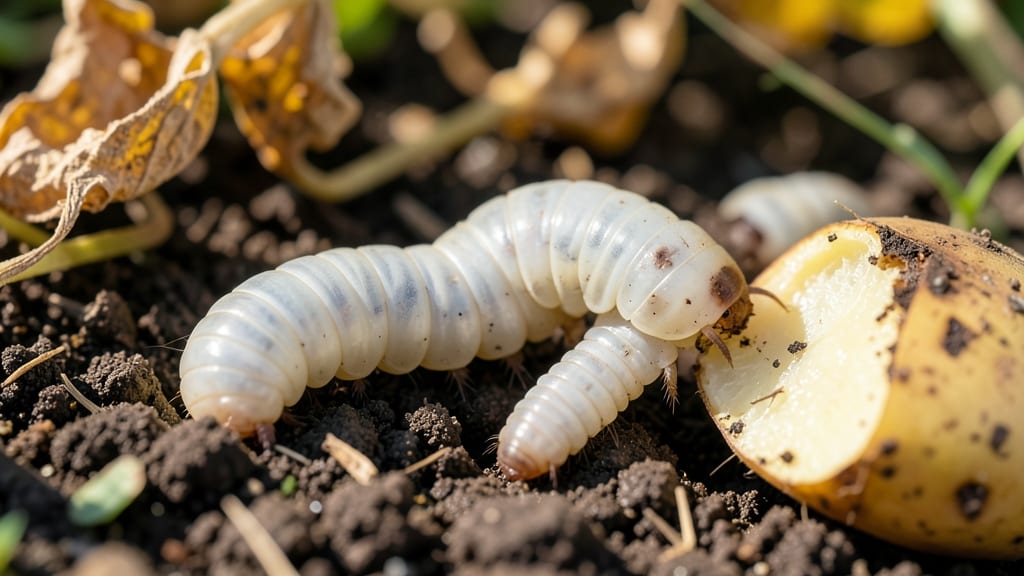
Grub worms are bad for your garden because they feed on grass roots and plant roots, weakening lawns and killing young seedlings. Their damage often appears as brown patches or wilting plants, requiring intervention to prevent long-term harm.
Grub worms—those C-shaped larvae of beetles—target the very foundation of your garden by munching through roots like tiny, relentless lawnmowers. 🌱 They don't just attack grass; they'll devour vegetable roots, flowers, and even shrubs, leaving behind patchy, lifeless areas that spread faster than you might notice.
The worst part? Their damage isn't always visible until your plants are already struggling to survive.
These pests thrive in moist soil, making spring and fall their peak destructive seasons. Without control, a single grub can turn a thriving garden into a battleground, where every plant fights for survival against an underground army.
The key to protection lies in early detection—look for spongy turf that pulls up easily or plants that suddenly wilt despite proper watering.
💡 In This Article
- How Grub Worms Destroy Grass and Plant Roots
- Natural and Chemical Solutions to Control Grub Worms
How grub worms destroy grass and plant roots
Grub worms—specifically the larvae of Japanese beetles, May/June beetles, and European chafer beetles—target roots with surgical precision. These pale, C-shaped larvae use powerful mandibles to chew through root systems, starting with the finer roots that absorb water and nutrients.
A single grub can consume up to 50 pounds of roots per acre per season, creating a network of tunnels that destabilize plants. 🌱 The damage escalates when multiple grubs target the same area, turning healthy root zones into a skeletal framework that can't support the plant above.
The most vulnerable plants include young seedlings (like tomatoes and lettuce), shallow-rooted vegetables (carrots, radishes), and turfgrass (especially Kentucky bluegrass and ryegrass). Grubs prefer moist, well-drained soil, which is why damage often appears in spring after winter rains or during fall when soil remains damp.
You'll notice spongy turf that pulls up easily or brown patches that don't recover after watering—these are classic signs of root destruction.
The worst offenders are third-instar grubs (about 1 inch long), which are large enough to cause visible damage but still small enough to hide deep in the soil.
What makes grubs particularly destructive is their lifecycle timing. Eggs hatch in late summer, and the larvae remain active until fall, when they burrow deeper to overwinter. This means damage often peaks in September and October, just as plants are preparing for dormancy.
The key mechanism is their feeding pattern: they start at the soil surface and work downward, creating a "V-shaped" damage zone where roots are severed cleanly. Unlike surface pests, grubs don't just nibble—they sever roots completely, which is why plants suddenly wilt despite adequate water.
Grubs also secrete enzymes that break down plant cell walls, accelerating decay in already damaged roots. This chemical attack weakens the plant's ability to transport water and nutrients, leading to stunted growth or death.
The most critical factor is soil moisture—grubs can survive droughts by burrowing deeper, but they become most active when soil moisture is between 15-25%, creating ideal conditions for both feeding and reproduction. 💫 This is why gardens in humid climates often see worse infestations than arid regions.
To identify grub damage, dig up a small section of affected turf or soil. Look for white, C-shaped larvae (about 1/4 to 1 inch long) clinging to roots or burrowed nearby. The presence of these larvae confirms the source of your plant's decline.
Unlike surface pests, grubs leave no visible trails or chewed leaves—their damage is hidden underground until it's too late for some plants.
Understanding this lifecycle helps explain why some plants survive while others die. Deep-rooted perennials (like asparagus or raspberries) can often outlast grub attacks, while shallow-rooted annuals (like basil or spinach) are decimated. The key to protection is early intervention—once roots are severed, even the hardiest plants struggle to recover. 🔥