
Tools
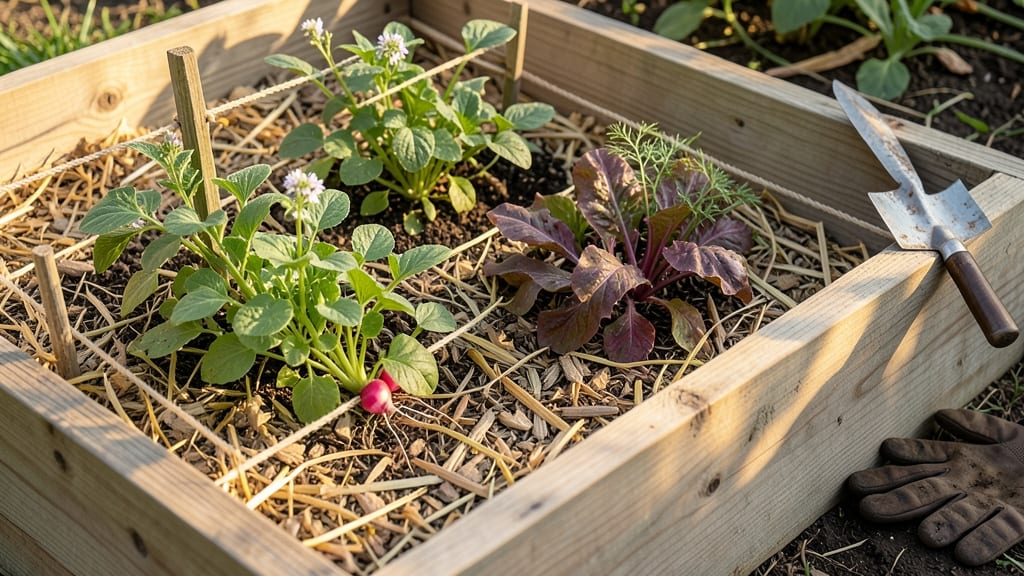
An 8x8 raised garden can pack more punch than you think—think 16 square feet of growing space, enough for a surprising bounty of veggies, herbs, and flowers.
You might assume a small footprint means small harvests, but with the right layout, you can grow tomatoes, peppers, lettuce, and even bush beans side by side without crowding. The key? Smart spacing and companion planting to keep pests away and yields high.
This guide breaks down how to design your 🌱 8x8 raised garden for maximum productivity, from soil prep to crop rotation, so you’re not just filling space—you’re optimizing it.
Ready to turn that tiny plot into a year-round harvest? I’ll show you how to plan, plant, and maintain it like a pro, even if your space is limited.
Optimal 8x8 raised garden layout for 16 square-foot planting
Dividing your 8x8 raised garden into 16 equal 2x2-foot sections transforms limited space into a high-yield powerhouse. This square-foot gardening method ensures every inch works for you while preventing plant competition. I’ve designed this layout to maximize both productivity and ease of maintenance, even for beginners.
Start by marking your 8x8-foot bed into a grid of 16 squares, each measuring 2x2 feet. This grid system lets you plant 16 different crops or multiple plants per square based on their size and spacing needs.
The key is pairing companion plants that support each other’s growth while avoiding competition for nutrients.
Companion planting is your secret weapon in this small space. For example, bush beans thrive near cucumbers because the beans fix nitrogen in the soil, while onions deter pests that attack cucumbers. Pairing lettuce with radishes also works—lettuce shades the soil to keep radishes cool, and radishes loosen the soil for lettuce roots.
Here’s how to optimize each 2x2-foot square for maximum yield without overcrowding:
| Square # | Plant(s) | Spacing | Sun Needs | Companion Pair |
|---|---|---|---|---|
| 1 | Tomato (1) | 1 plant | Full sun | Basil, Marigold |
| 2 | Peppers (4) | 1 per corner | Full sun | Onions, Spinach |
| 3 | Lettuce (9) | 3 per side | Partial sun | Radishes, Carrots |
| 4 | Radishes (9) | 3 per side | Full sun | Lettuce, Cucumbers |
| 5 | Cucumbers (2) | 1 per side | Full sun | Bush Beans, Corn |
| 6 | Bush Beans (4) | 1 per corner | Full sun | Cucumbers, Potatoes |
| 7 | Carrots (9) | 3 per side | Full sun | Onions, Lettuce |
| 8 | Onions (9) | 3 per side | Full sun |
Best crops for an 8x8 raised garden by season and yieldYour 8x8 raised garden can produce a surprising bounty when you focus on fast-growing, space-efficient crops tailored to each season. Spring brings cool-weather greens, summer thrives with heat-loving vegetables, and fall extends harvests with hardy root crops. The key is selecting varieties that mature quickly or produce high yields in limited space. I prioritize bush beans, radishes, and lettuce for spring, which deliver harvests in 30-60 days. In summer, tomatoes, peppers, and bush beans (again!) dominate with 6-8 hours of sun and vertical support. Fall's kale, carrots, and spinach tolerate cooler temps while packing nutrients.
For maximum yield density, I recommend planting 16 total crops in your 8x8 space by using square-foot gardening. For example, place 4 tomato plants (1 per 2x2 square) with 9 bush beans (1 per square) and 3 lettuce plants (1 per square) in summer. In fall, swap tomatoes for kale and add radishes between rows. Don't overlook vertical space—trellis pole beans or cucumbers to free up ground space for other crops. I've had success with cherry tomatoes growing 6 feet tall in a corner, while bush beans stay compact below. This dual-layer approach nearly doubles your harvestable area without expanding your footprint. Timing is everything: Direct-sow fast growers like radishes and lettuce 2 weeks before last frost, while transplanting tomatoes and peppers only after soil reaches 60°F. For fall crops, start kale and carrots 8-10 weeks before first frost to ensure maturity. A simple planting calendar keeps you on track. Pro tip: Interplant fast growers with slow ones—sow radishes between tomato plants in spring. The radishes harvest before tomatoes need full space, and their shallow roots won't compete. This double-cropping strategy maximizes your 8x8 square footage year-round. |